


This Contemporary house plan is organized around approximately 3,301 square feet of heated living space, giving you a balanced footprint that works well on both suburban and natural settings. The plan accommodates between 3 and 5 bedrooms depending on how you choose to finish optional spaces, and includes 3 full bathrooms. With its modern exterior geometry and thoughtful interior configuration, this design delivers a sense of openness, daylight connection, and functional flow that fits both everyday life and social gatherings. :contentReference[oaicite:0]{index=0}
Contemporary architecture typically emphasizes natural light, simple but bold forms, and an organized layout that supports flexible living — all present in this design. :contentReference[oaicite:1]{index=1}

Exterior & Curb Appeal
The exterior expresses contemporary style through clean, horizontal planes and a balanced composition that avoids unnecessary ornamentation. Large windows and streamlined rooflines create visual interest while inviting light deep into the interior spaces. The facade tends to read as composed and intentional, contributing to a modern presence that feels current without overt complexity. Naturally wide eaves and large glazed areas reinforce a design language that merges indoor and outdoor perceptions. :contentReference[oaicite:2]{index=2}
Because contemporary design often integrates exterior geometry with functional planning, the curb appeal here feels both bold and refined. The simplicity of form enhances adaptability for many landscapes and site orientations. :contentReference[oaicite:3]{index=3}

2D Floor Plan & Interior Layout
Inside, the floor plan generally emphasizes openness and connection. The main gathering zones — including great room, dining area, and kitchen — are arranged to support easy circulation and social interaction. Sightlines tend to run uninterrupted through shared spaces, making the home feel generous and connected without losing distinct activity zones. :contentReference[oaicite:4]{index=4}
The kitchen often features a central island that functions as a prep area, casual seating point, and hub for informal socializing. Adjacencies to service spaces — such as a mudroom near the garage entry and a laundry room positioned for practical transitions — help integrate daily routines into the broader social flow. When optional extra rooms like a study or bonus space are finished, they can serve functions ranging from home office to quiet retreat without disrupting primary circulation. :contentReference[oaicite:5]{index=5}
Contemporary plans often keep ceiling heights generous and use daylight strategically to enhance spatial quality, which this plan supports through wide openings and thoughtful room proportions. :contentReference[oaicite:6]{index=6}

Porch & Outdoor Living
Even though this is a contemporary design, outdoor living is often an implicit part of the plan. Covered patio or porch areas are typically connected to the main living spaces, creating seamless indoor–outdoor transitions. These zones feel like natural extensions of the interior, ideal for casual outdoor meals, relaxation, or entertaining. :contentReference[oaicite:7]{index=7}
The relationship between indoor and outdoor space underscores modern design values — openness, light, and connection — without compromising functional zones or sightlines. :contentReference[oaicite:8]{index=8}

Bedrooms & Bathroom Zones
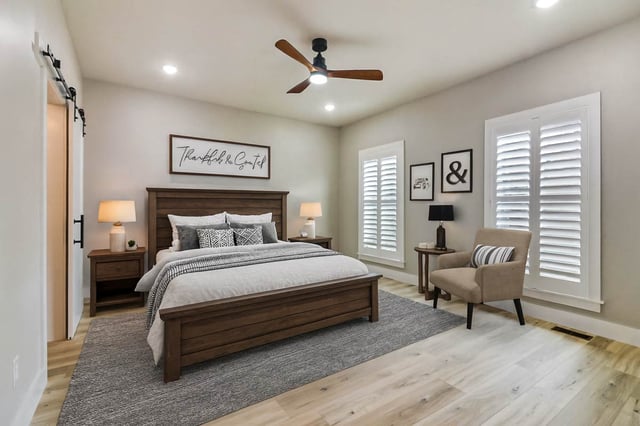
The bedroom configuration is typically arranged to balance intimacy and convenience. The primary suite is usually positioned in a quieter area of the home to serve as a private retreat with its own full bathroom and organized closet space. Secondary bedrooms are placed to allow separation of function while maintaining easy access to shared living zones. :contentReference[oaicite:9]{index=9}
With three full bathrooms distributed across the plan, daily routines are supported without excessive traffic conflicts — a practical consideration in contemporary family life. Optional rooms can add flexibility for guest accommodations, hobby spaces, or future growth. :contentReference[oaicite:10]{index=10}

Structure & Specifications
This type of contemporary plan generally uses conventional wood framing or other locally preferred methods and organizes spaces around wide, open spans. The roof geometry tends to be simple to moderate in pitch, supporting both architectural expression and practical weather performance. :contentReference[oaicite:11]{index=11}
Ceiling heights in main zones are often designed to be generous to enhance daylight penetration and spatial openness, while private zones can maintain comfortable proportions. The footprint’s flexibility allows adaptation to a range of lot sizes without significantly altering the interior planning logic. :contentReference[oaicite:12]{index=12}
Lifestyle & Cost
This contemporary design suits homeowners who appreciate open, light-filled spaces, modern aesthetic clarity, and functional adaptability. Its mix of social zones and private retreats supports daily family life, guest hosting, and flexible use over time. :contentReference[oaicite:13]{index=13}
In the United States, a home of approximately 3,301 square feet often falls into a construction cost range of roughly $200 to $325 per square foot, suggesting an approximate total build cost of about $660,000 to $1,073,000 USD. Final costs will depend on regional labor rates, site conditions, material quality, mechanical systems, and finish selections. High-end materials, expansive glazing, and complex architectural features can push the cost toward the higher end, while more standard material choices and efficient site preparation help manage the overall budget. :contentReference[oaicite:14]{index=14}
Overall, this Contemporary house plan delivers a thoughtful blend of modern form, strategic planning, and livable flow that supports both everyday comfort and intentional design language. :contentReference[oaicite:15]{index=15}