


This impressive Craftsman-style home plan delivers an exceptional balance of graceful exterior presence and highly functional family living. With approximately 4,405 square feet of heated space, the layout is designed to serve a broad range of lifestyles — from everyday family routines to larger gatherings and entertaining. The plan includes 4 bedrooms, 4 full bathrooms, 1 half bath, and a generous attached 3-car garage. Its well-proportioned footprint — roughly 103 feet 6 inches wide by 74 feet deep — anchors the home comfortably on a spacious residential lot while preserving architectural clarity and aesthetic cohesion.

At its core, this design reflects the enduring appeal of Craftsman architecture: thoughtful detailing, layered materials, and a connection between indoor and outdoor spaces that feels effortless rather than forced. Careful zoning of public and private areas enhances daily livability, and the plan’s flexible spaces adapt easily to changing family needs over time.
Exterior & Curb Appeal
The exterior tells a story of classic Craftsman proportion interpreted at a generous scale. A series of stepped rooflines, decorative brackets, and textured siding planes combine to create depth and visual interest. The composition avoids visual clutter by organizing massing around a strong central entry, anchored with a welcoming covered porch that feels appropriate for both casual use and formal arrival moments.

Traditional Craftsman cues — tapered porch columns, exposed rafter tails, and layered window groupings — give the facade rhythm without excess. The side-entry garage placement helps keep the street elevation composed and refined rather than dominated by parked vehicles, while the trim details and siding transitions reinforce a sense of craftsmanship and permanence.
Overall, the curb appeal here is the kind that feels timeless: grounded, comfortable, and capable of delivering both presence and warmth. The combination of scale, proportion, and detail creates a home that fits beautifully on larger lots without feeling oversized or imposing.

2D Floor Plan & Interior Layout
Stepping inside, the plan unfolds with a clear sense of purpose. The heart of the home is the open living zone where the great room, dining area, and kitchen come together in a connected but well-defined functional sequence. This open-concept arrangement encourages both relaxed everyday living and larger social interactions, making it ideal for families who want communal zones that remain comfortable and inviting.
The great room typically features a focal element such as a fireplace, balanced by generous natural light through thoughtfully arranged windows. Its adjacency to the dining and kitchen areas reinforces fluid circulation. The kitchen center island anchors the layout, offering abundant workspace, casual seating, and a natural staging point for gatherings — from weekday breakfasts to holiday buffets.
Near the garage entry, a mudroom and laundry zone help contain everyday clutter and streamline daily transitions. These practical spaces are thoughtfully positioned so they support functionality without interfering with the more refined social zones. The kitchen’s proximity to both service areas and main living spaces enhances convenience for both everyday use and hosting guests.
Off the main circulation, a flexible den or study provides a quieter retreat for work-from-home needs, reading, or hobbies. Its location at the front of the home delivers privacy while still feeling connected to the broader plan. Ceiling heights of approximately 10 feet throughout the main living areas contribute to a sense of openness and verticality without adding unnecessary construction complexity.

Porch & Outdoor Living
Outdoor living plays a central role in this Craftsman design. The front porch — comfortably sized and sheltered — creates a welcoming entry that encourages casual social interaction and daily relaxation. It’s the kind of space that invites porch swings, evening conversations, or a casual morning coffee while reinforcing a connection to the surrounding landscape.
At the rear, a large covered porch extends the living experience outdoors. At roughly 770 square feet of comfortable outdoor area, the rear porch is roomy enough for dining, lounging, and entertaining. Because it is directly accessible from the main living spaces, it feels like a natural extension of the interior rather than an afterthought. Its generous depth provides shade and shelter, making it usable across a wide range of weather conditions.
Well-designed outdoor rooms like this increase usable living area without complicating floor planning. By reinforcing indoor–outdoor connection, they elevate everyday living and expand the home’s functional range. Whether hosting a barbecue, relaxing with family, or simply enjoying fresh air at the end of the day, these outdoor spaces deepen the home’s livability.
Bedrooms & Bathroom Zones
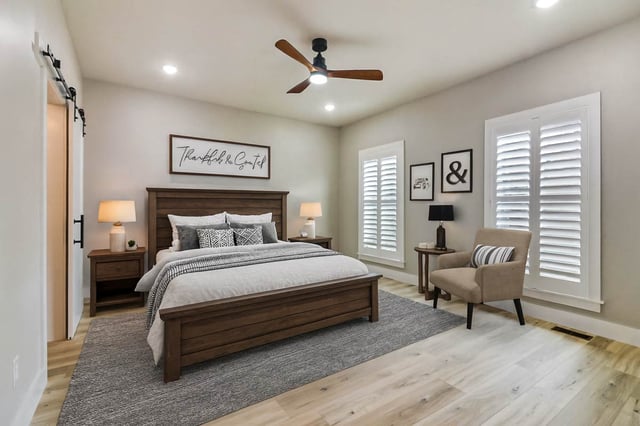
The bedroom planning supports both privacy and flexibility. The primary suite is positioned on one side of the home as a true retreat: separated from the secondary bedrooms and adjacent to main shared areas without being disrupted by high traffic. Its layout typically includes a generous full bathroom with dual vanities, a walk-in shower, and a spacious walk-in closet, creating a space that feels calm and rejuvenating.
Secondary bedrooms are arranged to maintain quiet and comfort. Each bedroom enjoys access to its own full bathroom when possible, which helps minimize conflict during morning and evening routines. The thoughtful distribution of bathroom access enhances convenience for both family members and guests, and reduces congestion at high-use times of day.
An additional half bath near shared spaces adds convenience for guests and daily use without compromising the privacy of the full baths. This separation of public and private zones is crucial for multi-phase household living, providing discrete spaces for sleep, rest, and personal care while still reinforcing the connectedness of common areas.

Structure & Specifications
This plan is conceived as a single-story home, using conventional wood framing with approximately 10-foot ceilings throughout main living areas. This arrangement creates a sense of vertical openness while maintaining clear spatial definition. The rooflines — often pitched around 9:12 — complement the Craftsman aesthetic and support practical drainage and weather performance.
The attached 3-car garage — with around 1,137 square feet of unheated space — offers ample room for vehicles, storage, and workshop needs. Its placement on the side of the home helps buffer noise and daily activity from core living spaces. Access from the garage into a dedicated mudroom keeps daily routines smooth and supports household organization.
Thoughtful structural detailing such as layered roof forms, well-placed windows, and carefully coordinated exterior materials contributes to both performance and aesthetic success. These elements reinforce a sense of craftsmanship that feels authentic rather than decorative.
Lifestyle & Cost
This Craftsman plan suits homeowners seeking a home that feels timeless in design yet wholly modern in functionality. The generous open shared spaces support everyday family life and social gatherings, while the private retreats and flexible zones accommodate changing needs over time. Outdoor living areas extend usable space and encourage daily enjoyment of fresh air and landscape connection.
In the United States, a home of around 4,405 square feet generally falls into a construction cost planning range of roughly $200 to $350 per square foot. That suggests an approximate total building cost of about $881,000 to $1,542,000 USD. Actual pricing will vary significantly depending on local labor markets, site conditions, material choices, finish selections, and regional regulatory costs.
Factors such as premium exterior materials, custom cabinetry, high-end fixtures, engineered structural elements, and complex mechanical systems can push costs toward the higher end of this range. Conversely, competitive regional labor markets, efficient material selections, and careful planning can support a more controlled budget. For homes of this scale, engaging with builders early in the design process often helps refine cost expectations and identify strategies that align with both aesthetic goals and financial planning.
Ultimately, this Craftsman home plan offers a cohesive combination of design elegance, functional clarity, and everyday comfort. Its balanced organization of space — from living zones to private retreats, from outdoor rooms to flexible utility areas — makes it a compelling choice for families who value both architectural quality and practical livability. Whether hosting celebrations or pursuing quiet family moments, this home’s thoughtful layout supports life at every pace.